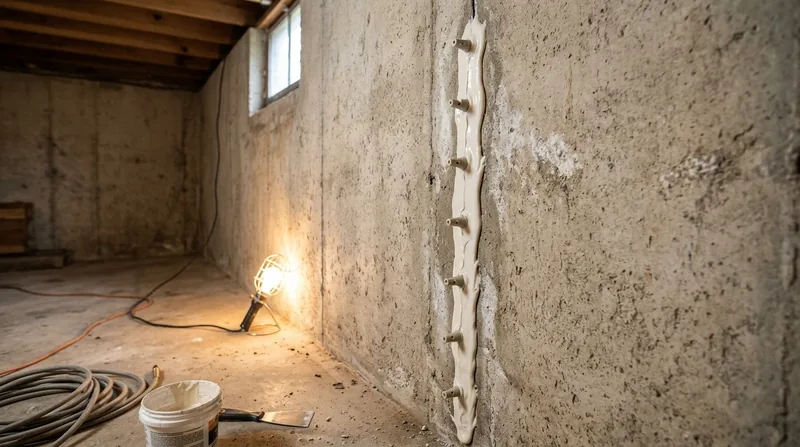




Foundation Crack Repair in Charlotte: What Piedmont Clay Does to Your Foundation
Foundation Crack Repair in Charlotte starts with understanding the ground under the house. The Piedmont here is deep red clay over weathered granite and gneiss, and those clay pockets swell when they soak up a summer thunderstorm and shrink hard when the dry weeks come back. That cycle pushes and pulls on foundation walls all year, and it is why a hairline crack in a Dilworth bungalow or a Plaza Midwood Tudor can open up fast after a wet spell. We inspect every crack, match it to epoxy or polyurethane injection, and tell you plainly when the crack is cosmetic and when hydrostatic pressure is the real driver. If you want the broader picture of how water moves against a foundation, start with our foundation waterproofing page, then come back to the crack itself.
Why Foundation Cracks Show Up So Often in Charlotte's Older Neighborhoods
Charlotte's building stock splits into two very different crack patterns. The 1920s to 1940s brick and stone foundation walls in Myers Park, Dilworth, Elizabeth and Eastover were laid with lime mortar that has had nearly a century to move, and they often sit on partial basements cut into a slope. The 1950s to 1970s brick ranches and split-levels across Sedgefield, Cotswold, Quail Hollow and Matthews have poured or block walls that crack along cold joints and shrinkage lines. Newer subdivision homes in Ballantyne, Huntersville, Waxhaw and Mooresville mostly sit on slab or raised foundations, so cracks there tend to be at the slab edge or where a walkout wall meets the grade.
- Shrink-swell clay pockets load one side of a wall harder than the other and open vertical cracks.
- Creek-side low spots along Little Sugar Creek and McAlpine Creek keep the water table high after storms.
- Hillside runoff from tropical storm remnants finds old mortar joints and window wells first.
- Downspouts that dump at the wall, and grading that slopes back to the house, feed the same cracks every season.
None of these is a reason to panic, but each one tells us which repair method will actually hold.
Key info: A 1938 brick bungalow off East Boulevard showed a stair-step crack at the corner last spring after three inches of rain in a day. The wall was moving on clay, not failing structurally, and epoxy injection plus a downspout extension solved it. A 1990s walkout in Waxhaw with the same-looking crack needed a different answer because the water was coming from uphill.
Before you authorize any repair, it helps to know what your local building department requires for structural foundation work, so check the Mecklenburg County permitting pages or call the city office that covers your address.
How We Diagnose and Repair a Foundation Crack in Charlotte
We do not sell a patch by the foot. Every crack gets the same sequence: look at the whole wall, find where the water is coming from, and only then pick the method. On a typical Charlotte call we are on site within a day or two, and the inspection itself is free. If the crack is tight and dry, epoxy injection is often all you need. If it is wet and seeping, polyurethane injection stops the leak and stays flexible. If the wall is bowing, a crack repair alone is the wrong tool.
- We walk the interior wall and the exterior grade, checking for efflorescence, staining and soft mortar.
- We map the crack width, direction and whether it is active (wet now) or dormant (stained but dry).
- We check the footing drain, downspouts and grading to see what is feeding the crack.
- We drill injection ports at the right spacing and seal the surface before pumping.
- We inject epoxy or polyurethane under pressure until the material reaches the far side of the wall.
- We trim the ports, parge the surface, and leave you a written note on what to watch.
If the inspection turns up a wet basement rather than a dry crack, we say so and point you to the right repair instead of injecting a wall that needs drainage.
Key info: A split-level in Cotswold had a horizontal crack at mid-wall and a musty smell after every storm. The crack was a symptom of hydrostatic pressure, not the cause. We recommended an interior drain tile system to relieve the pressure before any injection work, and the wall has stayed put since.
Crack Repair Methods We Use and When Each One Fits
Four approaches cover nearly every residential crack we see in the Charlotte metro. The table below is the short version; the inspection decides which row applies to your wall.
| Approach | Description | Best for |
|---|---|---|
| Epoxy injection | Structural epoxy pumped into ports to bond the crack faces back together. | Dry, non-structural vertical cracks in poured walls. |
| Polyurethane injection | Flexible foam that expands and seals active leaks under pressure. | Wet, seeping cracks and cold joints in block or poured walls. |
| Surface seal and parging | Hydraulic cement and a parge coat over a hairline or mortar joint. | Old brick and stone walls in Myers Park and Dilworth. |
| Carbon fiber straps | Straps anchored to the wall to arrest movement in a bowing wall. | Horizontal cracks and walls pushing inward from clay pressure. |
| Drainage correction | Downspout extensions, regrading and footing drain repair to stop the water source. | Cracks that keep reopening after every storm. |
When a wall is actually bowing, the crack repair is secondary work, and our bowing wall repair page covers the structural side.
Foundation Crack Repair Cost in Charlotte: What to Expect
Most single-crack injections in the Charlotte market start at $450 and run up from there. That starting figure covers a straightforward, accessible crack, typically one wall, one injection setup, and the surface seal. What moves the number is not the size of the crack alone: it is access (a finished basement wall costs more to work around than bare block), the number of cracks, whether the wall is wet and needs polyurethane instead of epoxy, and whether the real fix is drainage correction rather than injection. We quote the crack repair on its own and tell you separately if drainage work is needed, so you can decide in stages.
Get two or three estimates before you commit, and make sure each one is quoting the same method. A cheap patch over a wall that is still taking hydrostatic pressure will reopen. Our full pricing overview lays out the ranges for each method so you can compare apples to apples.
Foundation Crack Repair Near Me: How to Choose a Contractor Near Charlotte
Searching for foundation crack repair near me in Charlotte turns up a mix of dedicated waterproofing outfits, general foundation firms and handymen. The differences matter when a crack turns out to be a symptom of pressure rather than a standalone defect. Use the same checklist we would use on our own house.
- Confirm the contractor is licensed and insured, and ask for the certificate rather than taking a verbal yes.
- Get at least two written estimates that name the injection method and the port spacing.
- Ask for references from jobs in your part of the metro, since clay behavior varies from Myers Park to Mooresville.
- Ask who pulls the permit if the work is structural, and confirm the local building department's threshold.
- Check HOA rules before any exterior excavation or grading change, especially in newer subdivisions.
If a contractor cannot explain why your crack is there, keep looking. You can reach us through the contact page to set up a free inspection and get a straight answer.
When a Crack Is Simple and When It Is Not
We would rather tell you a crack needs nothing than sell you an injection you do not need. A tight vertical crack in a 1960s ranch wall that has been dry for years is often stable, and a surface seal is enough. A crack that is wet after every storm, has efflorescence around it, or sits at the corner of a wall on a slope is telling you water is loading the wall from outside. In that case the honest answer is usually drainage first, crack repair second, and we will say so on the inspection.
Key info: In Huntersville, a homeowner had three contractors quote injection on a wet basement wall. The actual problem was a failed footing drain and a downspout discharging at the corner. Once the drainage was corrected, the crack sealed and stayed sealed. That is the difference a proper inspection makes.
Charlotte's clay is not going anywhere, and neither is the seasonal swing that opens these cracks. What you can control is how fast you catch them and whether the repair matches the cause.
Foundation Crack Repair in Charlotte: Pricing Guide
| Service | Price | Details |
|---|---|---|
| Single crack, epoxy injection | Starting at $450 | Covers one accessible dry crack, port drilling, epoxy injection and surface seal. |
| Single crack, polyurethane injection | Starting at $550 | For active leaks and wet cold joints, includes flexible foam injection and cleanup. |
| Multiple cracks or finished wall | On estimate | Priced per crack and by access, since finished walls need more setup and protection. |
| Structural or bowing wall repair | On estimate | Carbon fiber straps or wall anchors require an on-site structural assessment before quoting. |
| Travel | Included | In Charlotte and surrounding areas, no separate call-out or mileage fee. |
| Estimate | Free | Response within 24h at (980) 272-4046, no obligation to book. |
Indicative pricing, the exact cost depends on square footage, finish, and site access. Free personalized estimate within 24h at (980) 272-4046.


