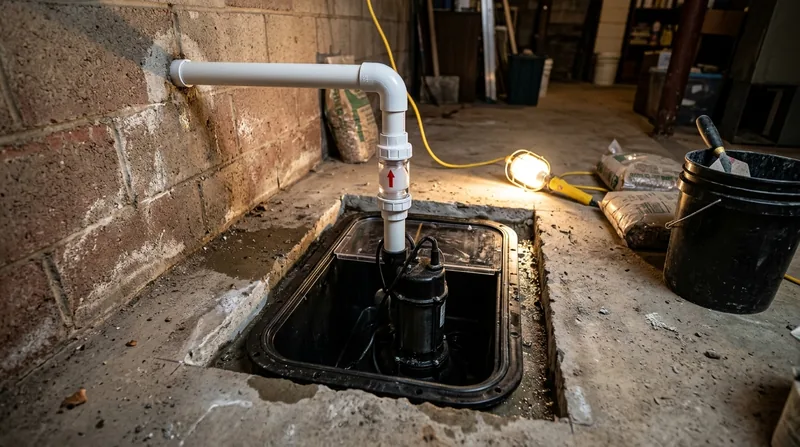




If your sump pump runs nonstop after every summer storm or you have already spotted water in the basement, the fix is rarely a bigger pump alone. Charlotte sits on the Piedmont, where deep red clay, shrink-swell pockets, and weathered granite hold rainfall near the surface instead of letting it soak away. In Myers Park, Dilworth, and Plaza Midwood, 1920s brick bungalows still drain through old footing tiles that clog with clay and roots, while 1990s subdivision homes in Ballantyne and Huntersville often rely on a single pump in a shallow basin. Sump Pump Installation & Replacement in Charlotte means matching pump capacity, basin depth, and discharge routing to how water actually arrives at your foundation. We install sealed basins, check valves, and discharge lines that carry water far enough from the house to keep up with cloudbursts and tropical rain bands. If you are still weighing your options, start with a basement waterproofing assessment so the pump is sized for the whole system, not just the hole in the floor.
Why Sump Pump Failure Hits Charlotte Basements Harder Than Homeowners Expect
Charlotte gets heavy summer thunderstorms and the remnants of tropical systems that drop several inches in a few hours. The clay soil and high water table after wet spells push hydrostatic pressure against foundation walls, and that water finds the path of least resistance: the sump basin. When the pump is undersized, the float sticks, or the discharge line dumps water two feet from the wall, the basin overflows and the basement floor stays wet. In older homes around Sedgefield and Cotswold, the original footing drain is often collapsed or silted in, so the sump pump is doing all the work alone.
- We size the pump to the actual inflow rate, not to a generic square-footage chart.
- We set the basin deep enough to handle short, intense rain bursts without short-cycling the pump.
- We install a check valve so water does not drain back into the basin after each cycle.
- We route the discharge line to a grade that carries water away from the foundation, not into the neighbor's yard.
- We seal the basin lid to keep clay silt, humidity, and basement odors out of the pit.
A pump that runs dry or short-cycles will burn out in a season or two, so getting the basin and discharge right the first time matters more than the pump brand on the box.
Key info: In creek-side low spots along Little Sugar Creek and McAlpine Creek, we routinely find pumps that discharge into a pop-up emitter sitting uphill from the foundation. The pump works hard, the water comes right back, and the homeowner thinks the pump is failing. Correcting the discharge grade often solves the problem before a new pump is needed.
Permits for work that alters drainage or the sanitary connection of a sump discharge are handled through the local building department, and rules vary by jurisdiction, so verify requirements before work begins. The City of Charlotte publishes current permit guidance for residential drainage work.
How We Install or Replace a Sump Pump in Charlotte Homes
We start by watching where water enters the basement during a wet spell, not by pulling a pump off the truck. That means checking the wall base, the floor joint, window wells, and the condition of any existing drain tile. From there we build the basin, set the pump, and test the discharge under real flow before we call the job done.
- We inspect the basement perimeter and identify the inflow points, including wall seepage and floor cracks.
- We cut and excavate a new sump basin at the low point of the basement floor, or enlarge an undersized existing pit.
- We set the basin in gravel, connect any interior perimeter drain, and seal the lid.
- We install the pump, float, and check valve, then run the discharge line to a positive grade away from the house.
- We fill the basin and test the full cycle, including the backup if one is specified.
If the basement has no interior drainage, we often recommend tying the new basin into an interior drain tile system so the pump is not the only line of defense against hydrostatic pressure.
Key info: A 1960s split-level in Matthews had a pump that ran every 90 seconds during a July storm and still could not keep the floor dry. The basin was only 14 inches deep and the discharge line ended at a downspout splash block against the wall. We set a deeper sealed basin, added a check valve, and extended the discharge to a daylight outlet at the slope. The pump now cycles normally and the floor stays dry.
Approaches We Use for Sump Pump Installation & Replacement in Charlotte
Not every wet basement needs the same setup. The right approach depends on how the water arrives, how much of it there is, and whether the basement already has a drain tile system. Here is how the common options compare.
| Approach | Description | Best for |
|---|---|---|
| New sump basin and pump | Cut a fresh basin at the basement low point, set a sealed pit, and install a correctly sized pump with a check valve. | Basements with no existing pit or a pit that is too shallow to handle inflow. |
| Pump replacement only | Swap a failed or undersized pump in an existing basin, then verify the float, check valve, and discharge line. | Sound basin and drain tile with a pump that has burned out or lost capacity. |
| Basin enlargement and reseal | Enlarge an undersized pit, add gravel, and seal the lid to stop short-cycling and silt buildup. | Pumps that cycle constantly during heavy rain or pits that fill with clay sediment. |
| Discharge line correction | Reroute the discharge to a positive grade or daylight outlet so water leaves the foundation zone. | Pumps that run hard but the basement still gets wet after storms. |
| Battery backup addition | Add a backup pump and battery on a separate float so the basin keeps draining during outages. | Homes that lose power during summer storms, which is common across the Charlotte metro. |
We recommend the simplest setup that actually keeps the floor dry, and we say so when a full drain tile system is the better answer than a bigger pump.
Sump Pump Installation & Replacement Cost in Charlotte: What to Expect
Most sump pump work in the Charlotte market starts around $1,200 for a straightforward pump replacement in a sound existing basin. A new basin, sealed lid, and discharge line correction typically runs higher because it involves cutting the floor, excavating, and re-grading the outlet. Homes with an existing interior drain tile system may need the pump tied into that system, which adds labor but gives better protection against hydrostatic pressure.
Cost moves with basin depth, pump capacity, discharge distance, and whether the floor is finished. Access matters too: a basement in a 1920s Dilworth bungalow with a narrow stair and low headroom takes more labor than a walkout in Waxhaw with a wide door. We give you a written scope before work starts so you know what is included. You can review the full breakdown on our pricing page.
Getting two or three estimates is smart, and not just on price. Ask each contractor how they sized the pump, where the discharge will terminate, and whether the basin lid will be sealed. A low bid that reuses a shallow pit and dumps water at the wall will cost more in the long run.
What to Look for When Hiring a Sump Pump Contractor Near Me in Charlotte
Waterproofing is a specialty, and sump work sits at the intersection of drainage and foundation repair. A general handyman can set a pump, but sizing the basin and reading the water path takes field experience with Piedmont clay and the older brick foundations common in Elizabeth and Eastover. Ask direct questions and expect direct answers.
- Confirm the contractor is licensed and insured, and ask for a certificate of insurance before work begins.
- Get at least two or three written estimates with a clear scope, not a verbal ballpark.
- Ask for local references from jobs similar to yours, especially older homes with original footing drains.
- Ask who pulls any required permit for drainage or discharge work, and verify the rule with the local building department.
- Check HOA requirements in subdivision communities like Huntersville and Mooresville before changing where the discharge exits.
We are happy to walk you through the scope and show you the basin and discharge plan before you commit. Reach out through our contact page to schedule a free basement inspection and a no-obligation estimate.
Sump Pump Installation & Replacement in Charlotte: Pricing Guide
| Service | Price | Details |
|---|---|---|
| Pump replacement in existing basin | Starting at $1,200 | Includes new pump, check valve, and cycle test; capacity and basin condition move the price. |
| New sump basin and pump installation | Starting at $1,850 | Includes cutting and excavating the floor, gravel bed, sealed lid, pump, and discharge connection. |
| Basin enlargement and reseal | Starting at $1,450 | Includes enlarging an undersized pit, fresh gravel, and a sealed lid to stop short-cycling. |
| Discharge line correction | Starting at $650 | Includes rerouting the discharge to a positive grade or daylight outlet away from the foundation. |
| Battery backup sump pump addition | Starting at $950 | Includes backup pump, battery, separate float, and alarm; battery size and run time move the price. |
| Complex or large-scale job | On estimate | Finished floors, deep excavation, or tie-in to an interior drain tile system need an on-site look first. |
Indicative pricing, the exact cost depends on square footage, finish, and site access. Free personalized estimate within 24h at (980) 272-4046.


