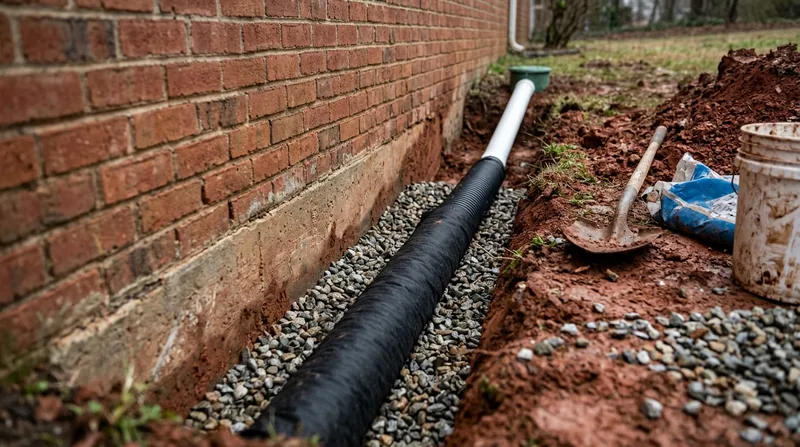




French Drain Installation in Charlotte: Stop Water Before It Reaches Your Foundation
Charlotte sits on the Piedmont, where deep red clay, weathered granite, and shrink-swell clay pockets hold water against foundation walls long after the rain stops. In Myers Park and Dilworth, 1920s brick bungalows with old stone footings take on hydrostatic pressure from saturated soil, while 1990s subdivision homes in Ballantyne and Huntersville fight hillside runoff and a high water table after summer thunderstorms. French Drain Installation in Charlotte intercepts that groundwater along the foundation wall and moves it away before it finds a crack, a window well, or a low corner. We install exterior gravel-and-pipe systems with fabric wrap, tied to daylight or a sump basin, built for the way water actually moves on your lot. If you are already seeing seepage, start with our basement waterproofing service to diagnose the source before we dig.
Why Charlotte Clay Lots and Creek-Side Low Spots Need a French Drain
Most Charlotte homes do not have the deep northern basement that a footing drain was designed for, so surface and shallow groundwater does the damage instead. Clay soil sheds water slowly, and after a heavy summer storm or a tropical remnant rain band, that water stacks up against the foundation. The failure modes we see most are efflorescence on brick, damp wall seepage after rain, and standing water in low corners near Little Sugar Creek and McAlpine Creek.
- Shrink-swell clay pockets open and close foundation cracks as the soil wets and dries.
- Downspouts that dump within three feet of the wall overload the soil at the footing.
- Hillside lots in Matthews and Mint Hill push runoff toward the house instead of away from it.
- Older brick and stone foundation walls in Plaza Midwood and Elizabeth wick moisture and show white salt bloom.
A properly graded French drain relieves that pressure at the source instead of patching symptoms inside the basement. For the local permit side, confirm drainage work scope with the Mecklenburg County code enforcement office before work begins, since rules vary by jurisdiction.
Key info: A 1950s brick ranch in Cotswold with a daylight basement had water crossing the slab every time a summer storm stalled over the city. The real culprit was a low rear corner where runoff pooled against the wall, not a failing footing drain. A 60-foot exterior French drain tied to daylight solved it.
How We Install a French Drain on a Charlotte Foundation
We start by reading the lot, not the basement. Water follows grade, so we walk the property, check downspout discharge, and find where the ground actually falls. Then we lay out a trench along the foundation wall at the right depth and slope, so the pipe carries water to daylight or a sump basin instead of sitting full.
- We mark the trench line and confirm the discharge point, whether that is daylight downhill or a sump basin tied to a pump.
- We excavate along the footing, keeping the trench clear of utilities and the foundation itself.
- We line the trench with filter fabric, then set washed gravel and perforated pipe with the holes facing down.
- We wrap the fabric over the gravel to keep clay fines out, which is what clogs a drain in Piedmont soil.
- We connect the discharge line, add a check valve where the drain ties to a sump, and test flow before backfilling.
- We restore grade and confirm the soil slopes away from the wall at the finish.
Where the drain ties to a pump, we size that pump for the volume the lot actually delivers. If you want the interior side addressed too, our interior drain tile system handles water that reaches the slab.
Key info: On a sloped lot in Waxhaw, the drain had to run 90 feet to reach a daylight outlet below the house. We set the pipe at a steady fall, wrapped it in fabric, and tied the downspouts into the same run so storm water never touched the foundation wall.
French Drain Approaches We Use in the Charlotte Metro
Not every lot needs the same trench. We choose the approach based on grade, soil, and where the water needs to end up. The table below shows the main options and when each one fits.
| Approach | Description | Best for |
|---|---|---|
| Exterior footing drain to daylight | Gravel and perforated pipe along the wall, sloped to a downhill outlet. | Sloped lots with a safe discharge point below the house. |
| Exterior drain to sump basin | Same trench, tied to a basin and pump where no gravity outlet exists. | Flat lots and low corners where water has nowhere to run. |
| Surface swale and downspout tie-in | Regraded soil and extended downspouts feeding the drain line. | Roof water dumping too close to the foundation. |
| Window well drain connection | Well drained into the French drain or sump instead of pooling. | Basement windows set below grade. |
Each option solves a different version of the same problem, and we tell you plainly which one your lot needs.
French Drain Installation Cost in Charlotte: What to Expect
Pricing starts from $25 per linear foot, and that figure reflects a standard exterior run with gravel, fabric, and pipe. The number moves with trench depth, access, and discharge distance. A short run along one wall in Pineville is a different job from a long hillside run in Mooresville that needs a sump basin and pump at the end.
- Trench length and depth drive the base price more than any other factor.
- Discharge distance matters, because a long run to daylight costs more than a tie-in to a nearby basin.
- Access limits slow the work, especially where a fence or mature tree sits against the wall.
- Soil conditions in shrink-swell clay can require more excavation and more gravel.
Get two or three estimates and compare scope, not just the bottom line. Our full pricing overview lays out how each part of the job is priced.
French Drain Installation Near Me: How to Vet a Contractor Near Charlotte
When you search for French Drain Installation near me, the list can look the same from one company to the next. The differences show up in licensing, references, and whether the crew understands Piedmont clay. Ask direct questions and expect direct answers.
- Confirm the company is licensed and insured, and ask for a certificate before work starts.
- Get at least two or three written estimates with the same scope so you can compare fairly.
- Ask for references from jobs in your part of Charlotte, not just anywhere in the metro.
- Find out whether the work touches drainage or a sanitary connection, since that can require a permit from the local building department.
- Check HOA rules in subdivisions like Ballantyne or Huntersville before any excavation near shared grade.
We answer those questions up front and put the scope in writing. Reach us through our contact page to schedule a look at your lot.
French Drain Installation in Charlotte: Pricing Guide
| Service | Price | Details |
|---|---|---|
| Standard exterior French drain | Starting at $25/linear ft | Gravel, fabric, perforated pipe and backfill along one foundation wall run. |
| Drain tied to sump basin | Starting at $45/linear ft | Adds basin, pump, check valve and discharge line where no gravity outlet exists. |
| Long or deep hillside run | On estimate | Depth, discharge distance and clay excavation volume need an on-site look first. |
| Travel | Included | In Charlotte and surrounding areas, no separate call-out or mileage fee. |
| Estimate | Free | Response within 24h at (980) 272-4046, no obligation to book. |
Indicative pricing, the exact cost depends on square footage, finish, and site access. Free personalized estimate within 24h at (980) 272-4046.


