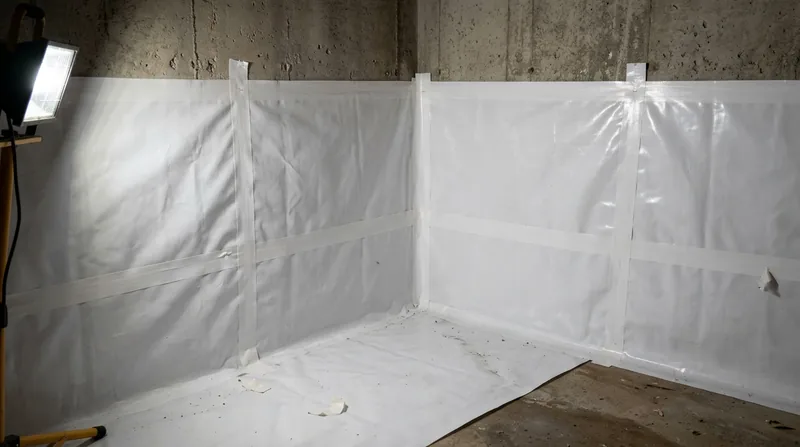




Vapor Barrier Installation in Charlotte
Charlotte sits on the Piedmont, where deep red clay, weathered granite and shrink-swell clay pockets hold moisture against foundation walls long after a summer storm passes. If your basement smells musty or the lower walls stay damp, Vapor Barrier Installation in Charlotte is the below-grade fix that blocks ground moisture vapor before it reaches your slab and wall framing. In neighborhoods like Dilworth, Plaza Midwood and Elizabeth, older brick and stone foundations wick moisture through mortar joints, while 1990s and newer walkout basements in Waxhaw and Huntersville pull vapor through poured concrete. We install heavy-duty sheets with sealed seams and taped terminations, then tie the system into your sump where needed. Start with a free basement inspection so we can confirm the source before any material goes up.
Why Vapor Barrier Installation Matters in Charlotte's Piedmont Clay
Charlotte's clay soil and high water table after wet spells push moisture vapor through concrete and brick, not just liquid water. That vapor condenses on cool basement walls and slab edges, feeding the musty smell and white efflorescence we see from Sedgefield to Quail Hollow. A proper vapor barrier stops the vapor at the wall and floor line, which is moisture control, plain and simple. It pairs with drainage, not instead of it.
- Clay pockets trap water against the footing, so vapor keeps loading the wall even when the floor looks dry.
- Older brick and stone foundations in Myers Park and Eastover wick moisture through mortar and need a continuous barrier.
- Daylight basements in Matthews and Cotswold collect condensation on the uphill wall, which a sealed barrier addresses.
- Hillside runoff after tropical storm remnants raises the water table fast, and a barrier slows vapor migration into the slab.
A barrier is not a substitute for drainage, but it closes the vapor path that drainage alone leaves open.
Key info: In a 1950s brick ranch off Park Road, the slab read damp for years after rain. The source was vapor through the cove joint, not a leaking pipe, and a sealed vapor barrier along the wall and floor stopped the musty smell within a week.
For the official view on basement moisture and foundation drainage, see the Mecklenburg County building and code resources before you plan any below-grade work.
How We Install a Vapor Barrier in a Charlotte Basement
We start by finding where the moisture actually comes from, because a barrier over an active leak traps the problem. On a 1920s bungalow in Plaza Midwood, that means checking the mortar joints and the cove line before we cut any sheet. On a 2010s walkout in Huntersville, we check the sump basin and the wall-floor seam first. The sequence below is the one we follow on every job.
- We inspect the walls and slab and mark efflorescence, damp patches and any active seepage.
- We correct grading and downspout extensions so roof water moves away from the foundation before we seal anything.
- We cut heavy-duty barrier sheets to fit wall height and slab run, allowing for sump basins and penetrations.
- We fasten the top edge, seal seams with compatible tape and adhesive, and tape the floor termination.
- We tie the barrier into the sump basin where one exists, or recommend a sump pump installation if the slab stays wet.
- We test the seams and terminations and walk you through what to watch for after the next heavy storm.
Each step is there because skipping it is how a barrier fails at the seam instead of the wall.
Key info: A split-level in Mint Hill had a damp uphill wall and a dry downhill wall. The barrier went on the uphill side only, tied into the existing interior drain, and the homeowner stopped running a dehumidifier every night.
Vapor Barrier Approaches We Use in Charlotte Homes
| Approach | Description | Best for |
|---|---|---|
| Wall and slab barrier | Heavy-duty sheet across walls and floor, sealed seams and taped terminations. | Damp walls and musty smell in full basements. |
| Sump-integrated barrier | Barrier tied into the sump basin with a sealed collar and check valve. | Basements with an existing sump and recurring floor dampness. |
| Partial wall barrier | Barrier on the uphill or wet wall only, tied to interior drainage. | Daylight basements with one damp wall. |
| Barrier over crack repair | Epoxy or polyurethane injection first, then barrier over the repaired wall. | Walls with a repaired crack that still show vapor. |
| Barrier with new interior drain | Interior perimeter drain and sump installed, then barrier tied into the system. | Wet floors with hydrostatic pressure. |
The right approach depends on whether your problem is vapor alone or vapor plus water, and the inspection settles that question.
Vapor Barrier Installation Cost in Charlotte: What to Expect
Most Charlotte vapor barrier work starts from $3 per square foot of treated wall and floor area, and the final number depends on how much wall you have, how many penetrations and seams the job carries, and whether the barrier ties into a sump or a new drain. A simple partial wall on a daylight basement in Matthews sits near that starting figure. A full basement with sump integration and crack repair before the barrier runs higher. We give you a written scope so you can compare line by line, and you can review the full pricing overview before the visit.
- Wall height and linear footage drive the material and labor total.
- Sump integration adds a collar, check valve and discharge tie-in.
- Crack repair before the barrier adds injection work on older brick and stone walls.
- Access matters in tight Myers Park basements with low headroom or mechanical equipment.
Get two or three written estimates, and make sure each one states whether drainage work is included or priced separately.
Vapor Barrier Installation Near Me: How to Choose a Charlotte Contractor
Searching for vapor barrier installation near me in Charlotte turns up general handymen, foundation firms and waterproofing specialists, and the scope each one quotes can differ a lot. Ask whether the company is licensed and insured, whether the estimate is written and itemized, and whether they will put the barrier over an active leak or fix the leak first. Confirm they carry general liability and workers' compensation, and ask for a certificate before work starts. A permit may be required if the job alters drainage or the sump discharge connection, and the Mecklenburg County building department has the final word, so verify the rule for your address. HOA architectural review may also apply in subdivisions in Ballantyne and Huntersville. Request your free estimate and compare it against the others you collect.
- Ask for proof of licensing and insurance, and call the references they provide.
- Get at least two competing written estimates with the same scope of work.
- Confirm in writing who pulls any required permit for drainage or discharge changes.
- Check HOA rules before exterior discharge or grading changes in subdivision homes.
A contractor who explains the moisture source before quoting the barrier is the one worth hiring.
Vapor Barrier Installation in Charlotte: Pricing Guide
| Service | Price | Details |
|---|---|---|
| Partial wall barrier | Starting at $3/sq ft | Covers one damp wall with sealed seams and taped terminations, priced by wall area. |
| Full basement wall and slab barrier | Starting at $3/sq ft | Covers walls and floor, with seam sealing and taped terminations included. |
| Sump-integrated barrier | On estimate | Adds a sealed collar, check valve and discharge tie-in to the existing sump basin. |
| Barrier with crack repair | On estimate | Epoxy or polyurethane injection on the crack first, then barrier over the repaired wall. |
| Travel | Included | In Charlotte and surrounding areas, no separate call-out or mileage fee. |
| Estimate | Free | Response within 24h at (980) 272-4046, no obligation to book. |
Indicative pricing, the exact cost depends on square footage, finish, and site access. Free personalized estimate within 24h at (980) 272-4046.


